NOTE: this post originally appeared on the blog of PhotoED Magazine at Thinking Outside the Cube
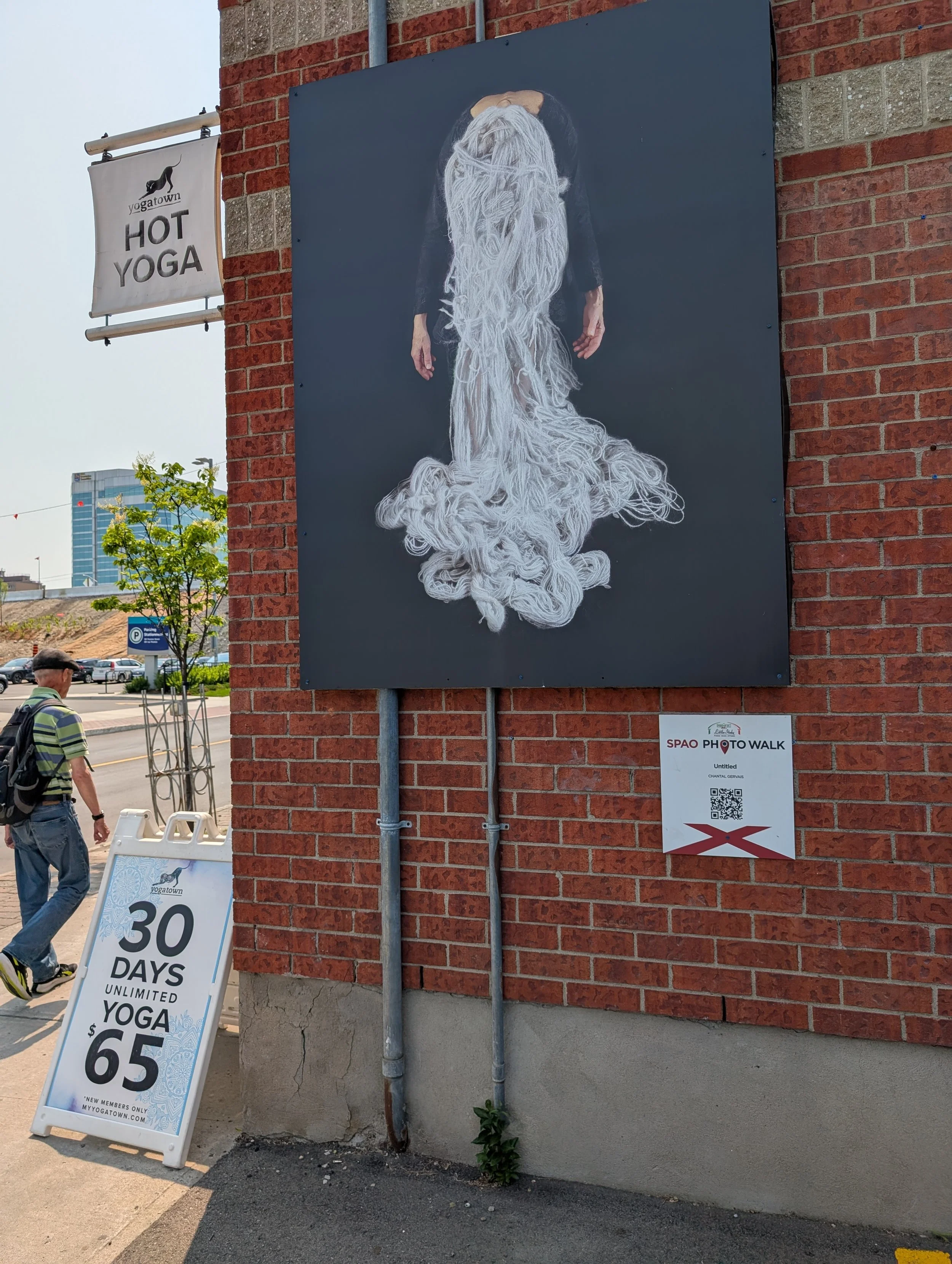
The white cube gallery. Hanging work on its walls may be the hope of many photographic artists, but crossing its threshold can be intimidating to others. Some galleries and museums look for novel ways to entice new visitors inside the cube, but the SPAO (School of the Photographic Arts: Ottawa) Photographic Arts Centre—in partnership with the Preston Street BIA—has done something much bolder: they’ve pulled the art off the white walls and taken the work of more than 30 photographers into the street.
The SPAO Photo Walk invites the public to use their smartphones to play a kind of treasure hunt around Ottawa’s Little Italy neighbourhood. In this case, each of the treasures is a weatherproofed enlargement of a piece of photographic art installed for all to see on the side of a building. The photographs were selected by a jury following a nationwide open call to help ensure a broad representation of talent from across the country, and from different levels of artistic experience. Every installation features a QR code linked to contextual information about the artist and their work, as well as a map indicating the location of the next stop on the hunt.
One of the benefits of following a loop is that walkers can join it at any point. You might choose to begin at SPAO (now celebrating 20 years as a photographic hub in Ottawa), but you might just as easily encounter a piece of art by chance and start your discoveries there. And the presence of the works on the streets invites a social angle that is not always practical in a gallery setting—a group activity that doesn’t need to worry about noise or decorum, taking in stimulating art with the occasional break in a café or pub to continue the conversation.
And sometimes the photographs turn the tables on viewers and question them. Ann Thomas, former Chief Curator at the National Gallery of Canada and one of the Photo Walk’s jurors, underlines that “public art can have the power to engage people in space and perspective and can return the gaze instantly.” As just one example of art returning the gaze, explorers on the walk may come across Diana Thorneycroft’s American Bachelorette and Canadian Bachelorette on the side of The Adelaide apartment building. The diptych—one photograph featuring a diorama of plastic figurines from American pop culture alongside a similar photo containing Canadian figures—does two things at once: it comments cheekily on the differences between the two countries…and it separates its audience. Americans and tourists from other countries will likely know all or most of the U.S. cultural references, but only a Canadian is likely to get the references in both photographs. The art calls out its own public.
Ann also points out that the presence of art in public places cannot help but make us more aware of the pervasive use of art in urban advertising, particularly on billboards and murals. As a juror, then, the competition for visual attention was a key consideration in her selections: “To me, the graphics element was important. You've got to stretch the imagination. And then stretch the scale, too, because you’re competing with big buildings and a lot of distractions. Bigger is better if you can do that.”
The Photo Walk is not just removed from the white cube, but it’s also located away from downtown Ottawa. “It's well chosen,” says Ann. “Not only because SPAO is located here, but because the location is diverse: there are commercial establishments, restaurants, bars, office towers, and homes. So, you've got a nice mix of people.”
That mix brings participants back to the social dimension again. While some might choose to explore the loop by themselves, there’s a good chance that many will opt to go with a partner, a friend, or even a group. Less precious than a gallery can be and much less frenetic than social media scrolling, the SPAO Photo Walk is a low-key way to democratize access to excellent photographic art.
And while every Canadian city can point to pieces of public art, these have often been commissioned specifically to fit a political or commercial purpose. By contrast, the Photo Walk’s contemporary works point to the interests of the artists who made them and, by extension, to the state of photographic art itself.
So, next time you are in the Capital, bring a pair of comfortable shoes. Then get a little outdoor exercise, stop for a break at a local café, and have fun with friends discussing some of the intriguing contemporary photography that the SPAO Photo Walk—and Canada—has to offer.
